
Or Just Be Random and Chaotic
I just learned the other day that one of the team members at one of my former churches took a break from the team and never came back. She’s at another church now.
I was so sad to hear that. And even though I’m sure there were other reasons, I couldn’t help but think that if we had only had a better system, she wouldn’t have burned out. She was always cheerful to serve, did a great job, and volunteered to help if no one else was available. Yet, I knew inside that it stressed her to serve and that I wanted to care for her.
I just didn’t have any accountability or intentionality in the way that I scheduled to make sure my people were serving at a livable pace for the long term.
However, I do remember serving at a place that had great systems. It was 2008, and I look back on it with fondness, really: my thirteen months as a shift supervisor at Starbucks #13636, or as my friend Jeremy calls it “The Mermaid.”
I’d most often ride my bicycle to work at 5:15 AM and wait for Liz, Chris, or another partner (aka “Starbucks employee”) to show up. We had to open the store at 6:00, so we’d hustle for those 30 minutes getting the coffee on, the pastries unwrapped, and counting in all the cash registers.
I’d go throughout my shift bantering with partners, serving customers, and complaining about how last night’s partners didn’t do this or that very well.
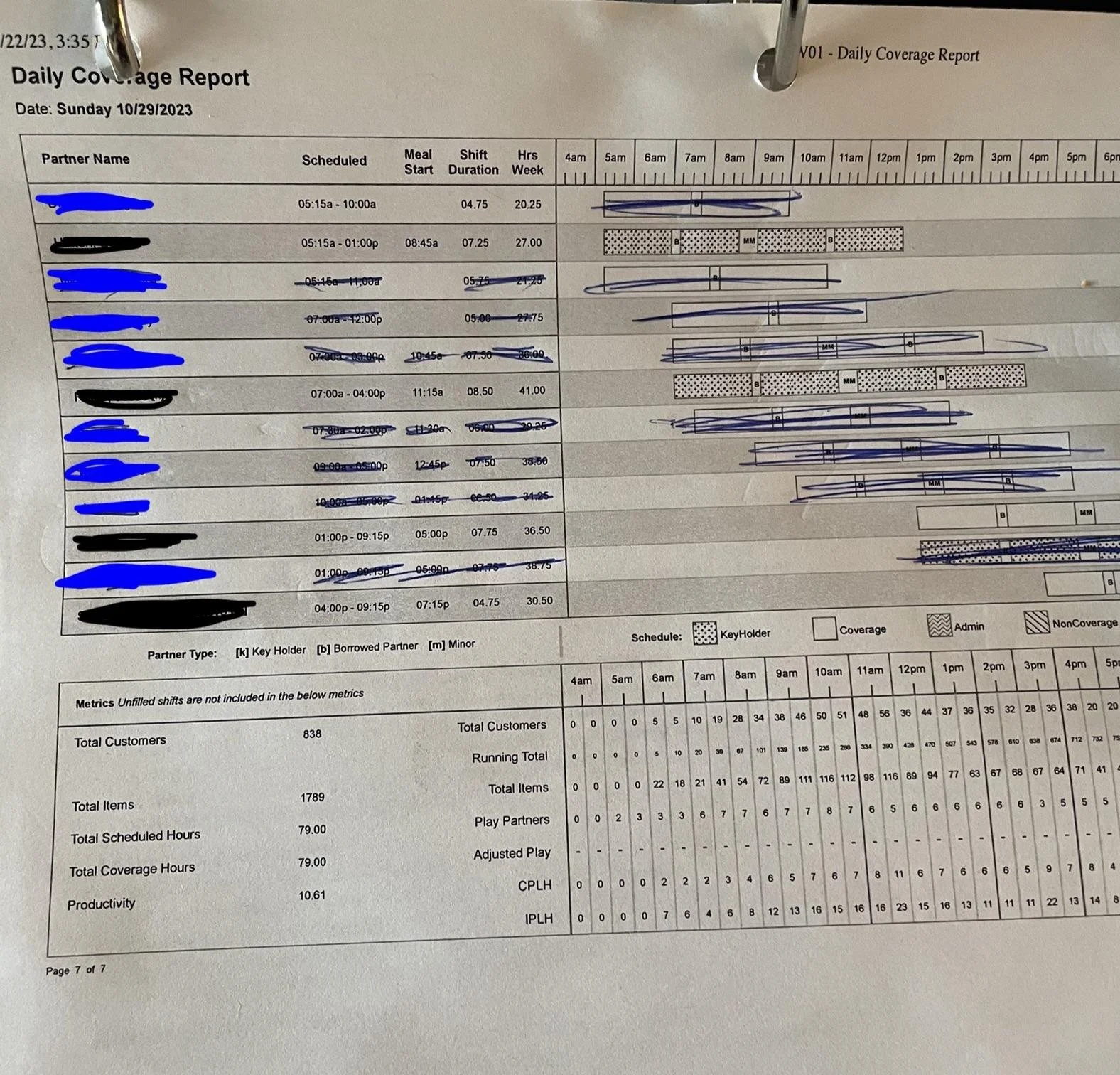
Our employer had created numerous great systems and tools for us. They literally have thought of everything and addressed it. One such system was the Daily Coverage Report.
I know, it sounds earth-shattering.
Ok, it sounds mind-numbing. But stick with me for a sec.
The DCR (as we called it) had lots of helpful info on it:
Who is working that day
What time do they start
What time is their lunch or 10-minute break
How many partners are scheduled per half hour, including if we are over- or understaffed
How many hours each partner is scheduled for that week
As partners, we often used it to see who we should text if they hadn’t shown up yet, or we’d fight about how so-and-so (Becky!) was scheduled for more hours than we were.
As supervisors and managers, this was not only a clear communication tool, but it also gave us details about how efficiently we were running the store. It allowed us to send someone home early if it was slow and they wanted to go anyway.
But this isn’t about Starbucks, though. It’s about you and how you lead your worship ministry.
The reality is that our most valuable resource is our team, our people.
Do you know the condition of your flock? (Proverbs 27:23) Do you have any system that helps minimize burnout from overuse or disengagement from under-use? Can you see a report that shows you how this may be happening?
You might be advanced Planning Center users, able to whip out a scheduling report at a moment’s notice. Or you may have five people on your team who serve every week.
The thing is this: you may have scheduled a perfect month, but have you scheduled livable years? In other words, we can all withstand a typical “Christmas Eve month” schedule, but can we do 12 or 36 of those in a row?
So, a simple question: What would it look like if you had a DCR for your team? How can you implement accountability and intentionality into your scheduling to ensure your team is healthy and well cared for?
Ps. Now, once again, as simply a fan of Starbucks, I wrote this with a Pike Place pour-over at my preferred store at the Paseo de las Flores. :)
-Dave Helmuth
Author of the Five Faders and Founder of Ad Lib Music
Or Just Be Random and Chaotic (Nº 217)
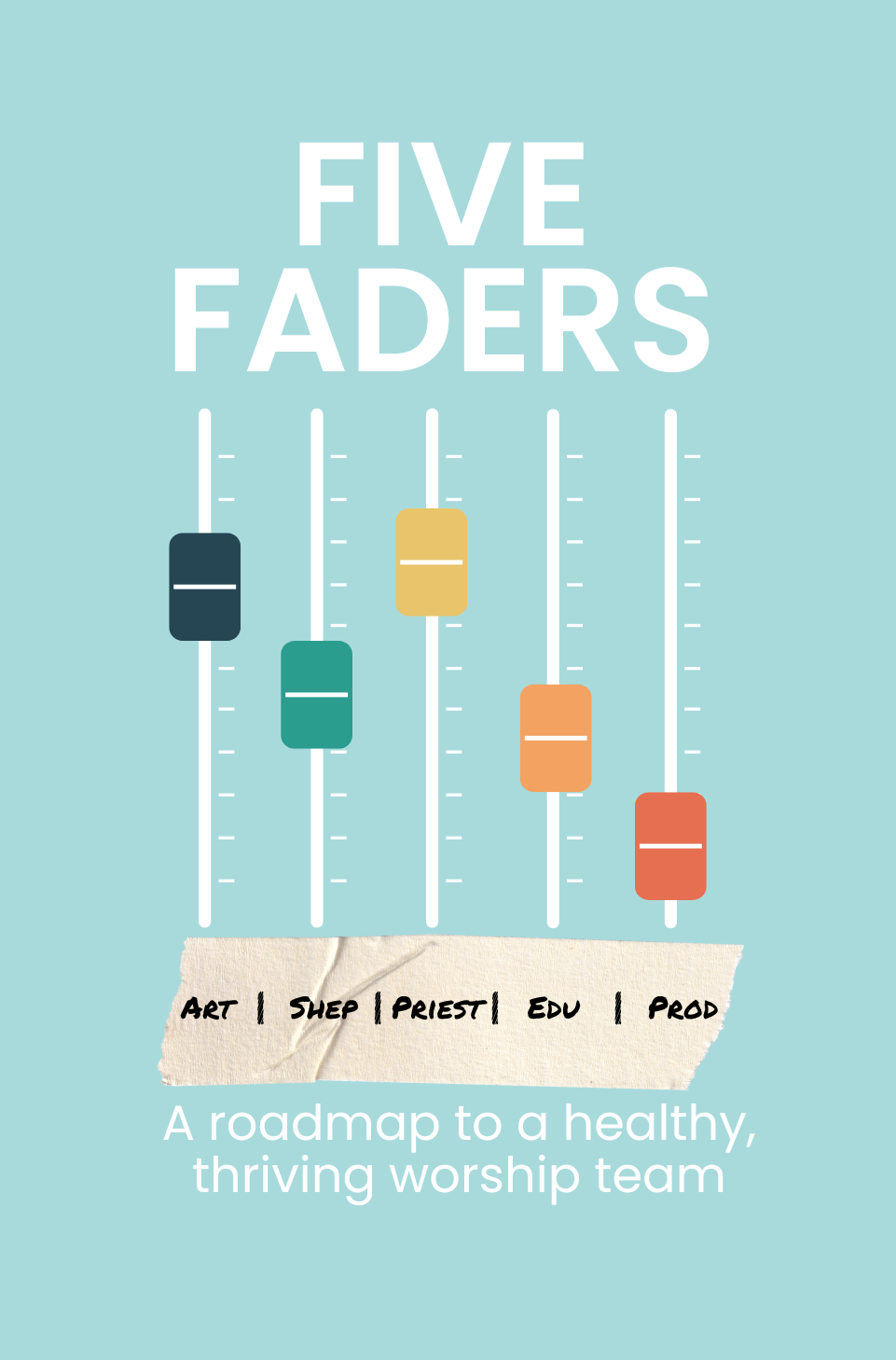


Five Faders w/ Dave Helmuth
Don't be another passionate, unhealthy leader (who doesn't know they are unhealthy) who misses their calling, has a moral failure, burns out, or burns others. (dang, that's dark!)
Be a Five Faders leader who is the best version of yourself and helps your team to do the same!
We'll explore the motivations we each have:
Artists notice nuance.
Shepherds consider the individual.
Priests overflow with simple love and pure devotion to Jesus.
Educators bring out the best in others.
Producers plan, in order to exceed usual limits.
The Five Faders model is not just a tool, it's a game-changer. It will help you understand your motivations and those of your team, paving the way for healthier and more effective leadership. The good news is that a Five Faders team is fantastic! The bad news is that if we don't know what motivates us, our passion often blinds us and we are an unhealthy expression of our Fader.
In this small group, we'll not just learn about the Five Faders, but also put them into action. We'll explore how to apply the concepts to our teams in a practical way, and learn from each other, which is one of the best ways to grow in your lowest Fader.
DATES AND TIMES
Mondays from 9 to 10:30 AM Central, from January 6 to February 24 (8 weeks)
BUY THE BOOK
https://amzn.to/4mWlA6a
WHO IS DAVE HELMUTH
I'm a coach who leads Ad Lib Music, the worship coaching organization I started in 2002. We have coaches in Pennsylvania, Colorado, Texas, and South Dakota. I'm the author of the Five Faders book. I serve as a missionary in Costa Rica, where my family of nine and I have lived since 2019.