
Recipes
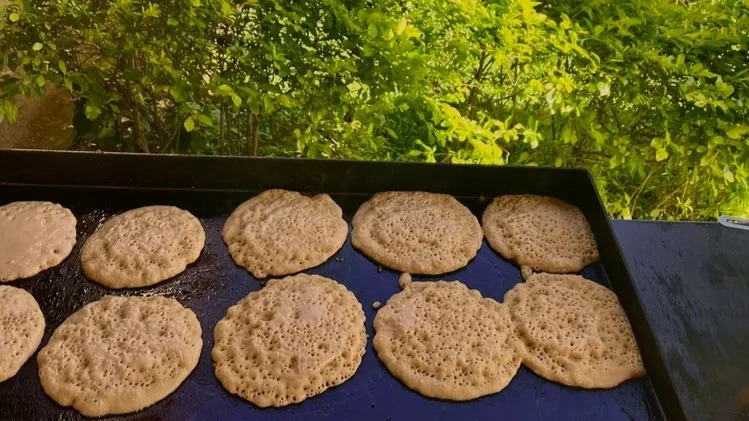
Many mornings, I’m on breakfast duty. One of my favorite kitchen tools is our griddle. It’s big. 720 square inches of cooking area. That’s about the same as ten 12-inch sauté pans. When you’re cooking for a family of nine, that comes in real handy.
I can make 21 pancakes at a time. Golden, fluffy pancakes. Or flat, rubbery pancakes. But hey, they go down the same, right?
I’ve probably made pancakes a hundred times. At first, I always followed the recipe. We do gluten- and dairy-free at our house, so it takes a little finessing. Knowing how gluten in regular wheat flour affects things is key. Rice flour and yuca flour don’t act the same as wheat; they require binding. That’s where eggs can help, but what you really want is xanthan gum.
It’s mind-blowing how a gluten-free batter you’re mixing up changes when you add just a half teaspoon of the stuff.
Now, after you’ve made the same recipe over and over, you start getting confident. Cocky maybe.
There are generally two types of cooks. Follow the recipe or make it up.
I tend to look at my available ingredients, search the internet for a recipe that includes those ingredients to see what spices may pair well, and then I just start cooking. Willy-nilly flinging things together, hoping for the best. And sometimes it works pretty well.
Recently, my family gave me that look and asked, “Dad, did you follow a recipe?”
I’m almost offended.
“Hey, I made breakfast. What else do you want?!”
But our worship teams are no different. There are generally two approaches. Follow the recipe or make it up.
In other words, someone on your team is complaining about how you’re “cooking,” and honor and love say that I should do something about it.
What does it look like for me to musically “follow the recipe?”
The musical equivalent of a recipe is an arrangement. Like recipes, there’s been a “test kitchen” where experiments have been made, failed results thrown out, improvements made, and a wide range of input has been taken into account. In fact, by the time we hear a recording, so many people have touched and influenced it that it’s likely to pass the test in many settings.
One of my favorite wedding gifts in 2005 was a recipe book. It’s called “The Best Recipe” from Cooks Illustrated. “The editors of Cook’s Illustrated have performed thousands of hours of kitchen testing to bring you a cookbook that not only provides the best recipes but also tells you how they came to be that way.” In other words, this book not only gives you a tested recipe; it tells you why it’s good and teaches you how to think, how different processes, ingredients, order, and temperatures affect the food. Now you know why I like it so much. (Thanks, Charles and Pam!)
So what does a good arrangement tell us?
THE TEMPO
The correct tempo is as important as knowing if it’s a teaspoon or a tablespoon of baking soda. I assure you, it will not be the same at the wrong tempo. Play with a click or have the drummer reference a metronome and click you off, but please don’t just start playing willy-nilly. We’ll notice.
THE FLOW
I’m the king of starting with the bridge, played quietly or even slowly, before jumping into the actual song. BUT this song has been through the production “test kitchen,” and everyone signed off on a great arrangement, a stirring flow. Follow it almost always. You’ll be surprised at how solid your musicians are and how loud the congregation sings when it's familiar.
THE DYNAMICS
A song without dynamics is dead. Just like faith without works. But seriously, highs and lows are the heartbeat of the song. I double-dog dare you to play more quietly than you think is possible and more loudly than you think is appropriate. Not for the whole song, but let it rise and fall, crescendo and decrescendo. Here’s the idea: where does this song peak? Where is its pinnacle? Start somewhere and build up to it. Don’t be afraid to let it drop out in parts or explode in others. Widen your dynamic range.
I know this wasn’t about pancakes. It’s about making great music to worship the Lord with. He’s worthy of a great offering.
-Dave Helmuth
Author of the Five Faders and Founder of Ad Lib Music
Recipes (Nº 481)
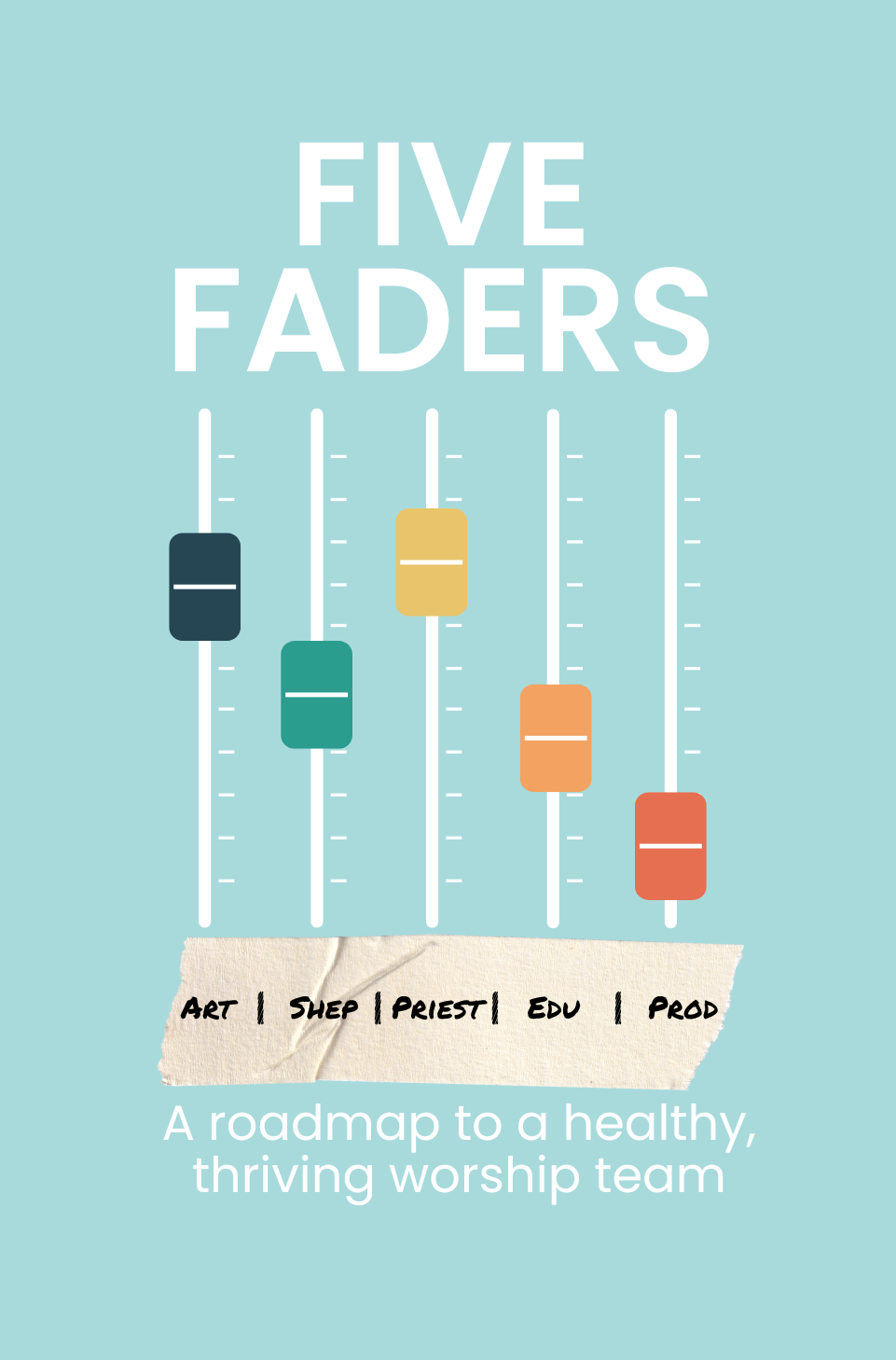
Why do some leaders succeed at building lasting worship ministries while others fail? In the Five Faders, Dave Helmuth explores the process of development and breaks down the lies, myths, and traps keeping you from being the fruitful leader God desires. Using decades of evidence-based insights, Dave reveals how understanding what motivates you is the first step in becoming a Five Faders Leader.
With our framework for becoming the best Artist, Shepherd, Priest, Educator, and Producer, you'll learn to slide each Fader up or down as Love requires you in each moment of leadership. Through relatable stories, insight gained from years of coaching worship teams in every kind of setting, and step-by-step advice, readers learn how to become the healthy expression of their Fader, build a culture of honor on your team to bring out the best in everyone, and be the most effective leader in the ever-changing landscape of ministry. Whether you’re looking to relieve frustration, increase confidence, or outlast change, this book offers the tools to become a Five Faders Leader.
Buy on Amazon at https://amzn.to/3WqUeKi.
DISCOUNTS: If you want to receive 10% off your order of 10 or more, order from this link and enter BULK10 to your order!
• Ceramic
• 11 oz mug dimensions: 3.79″ (9.6 cm) in height, 3.25″ (8.3 cm) in diameter
• 15 oz mug dimensions: 4.69″ (11.9 cm) in height, 3.35″ (8.5 cm) in diameter
• Lead and BPA-free material
• Colored rim, inside, and handle
• Dishwasher and microwave safe
Whether to fill it with Costa Rican coffee is up to you.